
What in the hell is Greg Sankey and the SEC doing?
The conference has amended its federal lawsuit and scheduled a meeting of its presidents and chancellors to consider expelling LSU—a founding member of the SEC since 1933.
Expelling LSU.
Not issuing another fine. Not appealing the Louisiana court’s decision and allowing the legal process to play out. Not sitting down with LSU and trying to resolve the eligibility mess like grown adults.
They are threatening to throw one of the most successful and recognizable programs in college football out of the conference.
All because LSU refused to fall in line.
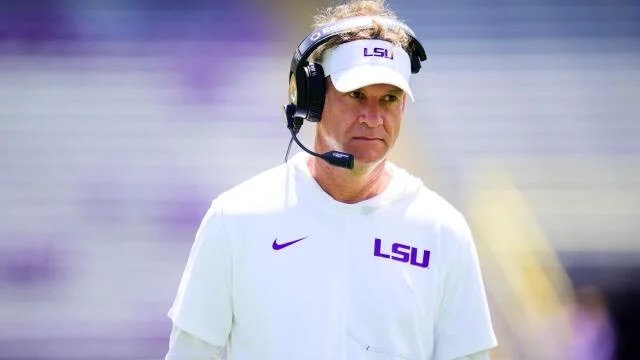
The SEC claims LSU lacks institutional control over its athletic program, particularly Lane Kiffin. But I have a question: Is LSU really out of control, or is the actual problem that Greg Sankey and the SEC cannot control Lane Kiffin?
Those are two completely different things.
A lack of institutional control means a university cannot govern its own athletic department. It means coaches and administrators are running wild while the people in charge either do not know what is happening or refuse to stop it.
That does not appear to be what is happening at LSU.
LSU’s administration knows exactly what Lane is doing. The university made a deliberate decision to challenge the SEC’s newly created eligibility rule. LSU went to court, presented its position and received legal protection.
You may disagree with LSU. You may believe that players who signed NFL contracts should never be permitted to return to college football. I have concerns about that myself.
But disagreement is not a lack of institutional control.
LSU has not lost control of Lane Kiffin. LSU hired Lane Kiffin because of who he is.
Lane is outspoken. He is aggressive. He pushes boundaries. He uses every available tool to improve his football team, and he does not give a damn whether his personality makes the old men sitting around the SEC country club uncomfortable.
That is not a defect. That is part of what makes him successful.
I believe Lane Kiffin is one of the best coaches the SEC has ever had. In today’s game, I would put him behind only Nick Saban. He understands offense, quarterbacks, recruiting, NIL, the transfer portal and the psychology of modern players better than almost anyone in the sport.
College football changed, and Lane changed with it.
Maybe that is the real problem.
Lane does not fit the SEC’s preferred stereotype. He is not going to stand behind a podium, speak in rehearsed clichés and thank the commissioner for allowing him to participate. He is going to speak his mind, needle his opponents and exploit every advantage the rules—or a court—give him.
The SEC’s amended filing even points to Lane’s public comments as evidence against LSU. Think about that.
They are using a football coach’s personality and comments as evidence that a university lacks institutional control.
That tells me this is no longer primarily about two players. It is about obedience.
Dae’Quan Wright and Zxavian Harris signed NFL contracts, were waived and sought another year of college eligibility after the NCAA changed to its five-years-to-play-five model. A Louisiana judge issued an injunction allowing them and dozens of other athletes to play while preventing the NCAA and SEC from punishing the schools involved.
LSU did not secretly sneak them onto the field. It challenged the rule through the legal system and won temporary protection.
The SEC did not like the result.
So now the conference wants to establish that if a member challenges its authority, the ultimate punishment is available: expulsion.
That is a dangerous precedent.
If LSU can be threatened with expulsion for using the courts to challenge an eligibility rule, what happens the next time a member challenges the SEC over revenue distribution, scheduling, disciplinary authority or media rights?
Does every disagreement become insubordination?
Does every legal challenge become evidence that a university no longer shares the conference’s values?
This sounds less like a partnership of universities and more like a private country club reminding one member that it can revoke his membership whenever he embarrasses the board.
And make no mistake: LSU embarrassed the SEC.
LSU refused to vote for Sankey’s punishment structure. LSU challenged the conference in court. LSU won temporary protection. Lane talked about it publicly instead of pretending the dispute did not exist.
Then LSU went out and beat the hell out of Clemson.
Now the conference is escalating.
The SEC has every right to defend its rules. It can appeal the injunction. It can argue that allowing former professional players to return creates an unfair competitive advantage. It can take that argument through the proper legal process.
But attempting to expel LSU is not a reasonable response. It is a power play designed to remind every other member who controls the conference.
This stopped being about eligibility when expulsion entered the conversation.
It is now about Greg Sankey and the SEC demanding complete control over their members—and discovering that Lane Kiffin and LSU are not particularly interested in kissing the ring.
The SEC says LSU lacks institutional control.
I think LSU knows exactly what it is doing.
The people losing control appear to be sitting in the conference office.