

By Jim Baxter | JB Talking Sportz
Every year, during my evaluation of NFL Draft prospects, I come across a player who makes me wonder why more people aren’t talking about him. Sometimes it’s a player from a smaller program who hasn’t received the national exposure afforded to players at major universities.
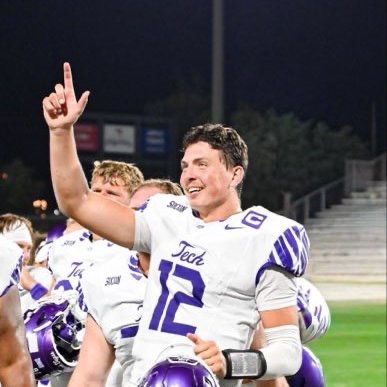
Tennessee Tech quarterback Jax Leatherwood is one of those players.
At 6-foot-8 and 253 pounds, Leatherwood immediately gets your attention. Those aren’t typical quarterback measurements. Hell, those are measurements you would expect to see from a tight end or an edge rusher.
But it’s what Leatherwood has been doing with the football that has really piqued my interest.
JAX LEATHERWOOD | QUARTERBACK
School: Tennessee Tech
Height: 6-foot-8
Weight: 253 pounds
Projected 40-yard dash: 5.16 (unverified)
Hometown: San Diego, California
Previous programs: Nevada, San Diego Mesa College, Southeast Missouri State
The Production
Leatherwood’s statistical progression over the past two seasons is something NFL scouts should be paying attention to.
In 2025 at Southeast Missouri State, he completed 174 of 277 passes for 1,969 yards, 12 touchdowns and just two interceptions, completing 62.8 percent of his attempts.
His production at Tennessee Tech in 2026 has been considerably more impressive. With 2,923 passing yards, 28 touchdowns and just five interceptions on 258 of 379 attempts, Leatherwood has elevated his completion percentage to 68.1 percent.
Over those two seasons, we’re looking at 4,892 passing yards, 40 touchdowns and just seven interceptions.
I don’t care what level of football you’re playing. Those numbers warrant an evaluation.
What’s particularly encouraging is that his completion percentage has increased significantly despite an increase in passing volume. His yards per attempt have also improved, suggesting that the increased accuracy hasn’t necessarily come at the expense of productivity downfield.
His performance against Wofford was particularly impressive. Leatherwood completed 38 of 48 passes for 427 yards and five touchdowns, engineering a comeback from a 14-point fourth-quarter deficit.
He threw three touchdown passes in the fourth quarter and distributed the football to 12 different receivers during the game.
Those are the types of performances that make me want to get my hands on more game film.
The Physical Evaluation
From a purely physical standpoint, Leatherwood is an intriguing prospect.
At 6-foot-8, he possesses a natural advantage in his ability to see over offensive linemen and identify developing opportunities downfield. His throwing platform and potential release point could present problems for defensive linemen attempting to disrupt passing lanes.
However, being exceptionally tall isn’t necessarily an advantage in every aspect of playing quarterback.
Longer limbs can create mechanical challenges. A quarterback of Leatherwood’s size must demonstrate that he can maintain a compact throwing motion, consistently establish his throwing platform, and get the football out of his hands quickly.
One of the things I would particularly like to evaluate is the biomechanical efficiency of his throwing motion.
How well does he transfer energy from his lower body through his hips and torso? How consistent is his release point? Does the length of his throwing arm create unnecessary movement in his delivery?
Arm strength isn’t simply a product of muscular strength. Much of it is generated through the efficient sequencing of the body’s kinetic chain.
These are things that require a comprehensive film evaluation and, ideally, an opportunity to observe him performing individual throwing drills.
His physical dimensions are intriguing, but how efficiently he utilizes those dimensions will be considerably more important.
The Mental Aspect
Perhaps the most encouraging statistical characteristic of Leatherwood’s game is his apparent ball security.
Forty touchdown passes against just seven interceptions over two seasons is an impressive ratio.
While interception totals alone don’t necessarily tell us how well a quarterback processes information, they give us a reason to investigate further.
I want to see how quickly Leatherwood progresses through his receivers. I want to see how he responds to disguised coverages, whether he’s capable of manipulating safeties with his eyes, and whether he anticipates throwing windows or waits until his receivers are visibly open.
That last distinction is particularly important.
In the NFL, by the time a receiver looks open, the window may already be closing. Successful professional quarterbacks frequently deliver the football before a receiver makes his break.
I also want to see how Leatherwood responds when his first read is taken away and pressure begins collapsing the pocket.
His performance against Wofford suggests he’s capable of producing under pressure in critical game situations. Now I want to evaluate how he handles pressure on individual plays.
The Level of Competition
This is going to be the biggest question surrounding Leatherwood’s professional evaluation.
Playing at the FCS level doesn’t disqualify a quarterback from becoming a successful NFL player. Steve McNair, Joe Flacco, and Tony Romo all demonstrated that outstanding quarterbacks can emerge from outside the highest level of college football.
But it does complicate the evaluation process.
The speed of defensive personnel, the sophistication of defensive schemes, and the ability of defensive backs to close passing windows are considerably different at the professional level.
Can Leatherwood make the same throws against defensive backs who are significantly faster and more athletic than those he regularly faces?
Can he maintain his mechanics when facing NFL-caliber edge rushers?
Can he operate efficiently when the pocket becomes considerably more congested?
Those are legitimate questions that his statistical production cannot answer by itself.
If Leatherwood has another year of college eligibility, I would love to see him compete at a Power Four program. His remaining eligibility would need to be confirmed, but if returning is an option, it could represent an enormous opportunity to elevate his draft stock.
Imagine what another productive season against SEC, Big Ten, ACC, or Big 12 competition could do for his professional prospects.
Strengths
- Exceptional size and physical dimensions.
- Impressive statistical accuracy and efficiency.
- Outstanding touchdown-to-interception ratio.
- Significant year-to-year improvement.
- Potentially advantageous throwing platform and field visibility.
- Demonstrated ability to produce in critical game situations.
- Encouraging distribution of the football among multiple receivers.
Areas of Concern and Further Evaluation
- Level of collegiate competition.
- Release quickness and mechanical efficiency.
- Footwork and lateral mobility within the pocket.
- Ability to deliver accurate passes under pressure.
- Anticipatory throwing against sophisticated defensive coverages.
- Verified arm strength and athletic testing.
- Ability to consistently execute NFL-caliber throws into tight windows.
NFL Physical Comparison
From a physical standpoint, Leatherwood reminds me of former NFL quarterback Brock Osweiler, with some similarities to Joe Flacco as a traditional quarterback prototype.
That is not a comparison of their overall abilities or professional potential. It is simply a comparison of physical stature and quarterback archetype.
At his size, Leatherwood projects initially as a traditional pocket passer rather than the type of dual-threat quarterback that has become increasingly popular in today’s NFL.
But a quarterback doesn’t necessarily need to be a great runner. He needs to be sufficiently mobile within the pocket to avoid pressure, create throwing lanes, and establish a position from which he can accurately deliver the football.
There is a tremendous difference between mobility and running ability.
Preliminary NFL Draft Projection
Current evaluation: Developmental quarterback prospect
Preliminary draft range: Late-round consideration to priority undrafted free agent, if eligible and entering the draft.
Draft stock: Rising prospect to monitor
I’m not prepared to assign Leatherwood a definitive draft grade without conducting a more extensive film evaluation.
However, I believe his physical attributes and statistical production make him a legitimate developmental prospect who deserves the attention of NFL scouting departments.
If he demonstrates sufficient arm strength, efficient throwing mechanics, and the ability to process information quickly, his draft ceiling could be considerably higher than his current exposure would suggest.
Baxter’s Bottom Line
I’ve always enjoyed evaluating players who aren’t necessarily household names.
Anyone can turn on the television and watch Arch Manning or LaNorris Sellers. Those guys have been dissected by virtually every draft analyst in America.
But sometimes the most interesting evaluations involve finding a player before everybody else starts talking about him.
A 6-foot-8, 253-pound quarterback completing more than 68 percent of his passes with 28 touchdowns and five interceptions?
You’ve got my attention.
I’m not suggesting Jax Leatherwood is the next Joe Flacco, nor am I suggesting that he is necessarily ready to play quarterback in the NFL.
What I am suggesting is that there is enough here to warrant a much more extensive evaluation.
And if he has another year of eligibility, I would be very interested in seeing what he could accomplish at a major college football program.
Remember the name Jax Leatherwood.
He’s officially on my NFL Draft sleeper watchlist.