

A FIVE-STAR ARM DOESN’T MAKE A FIVE-STAR QUARTERBACK
By James Baxter
I’ve been involved in evaluating and developing football players for a long time. I’ve worked as a national recruiting analyst, evaluated thousands of prospects, coached quarterbacks, worked with Elite11 and Nike Combines, founded QB1 Performance and spent countless hours studying the mechanics of throwing a football.
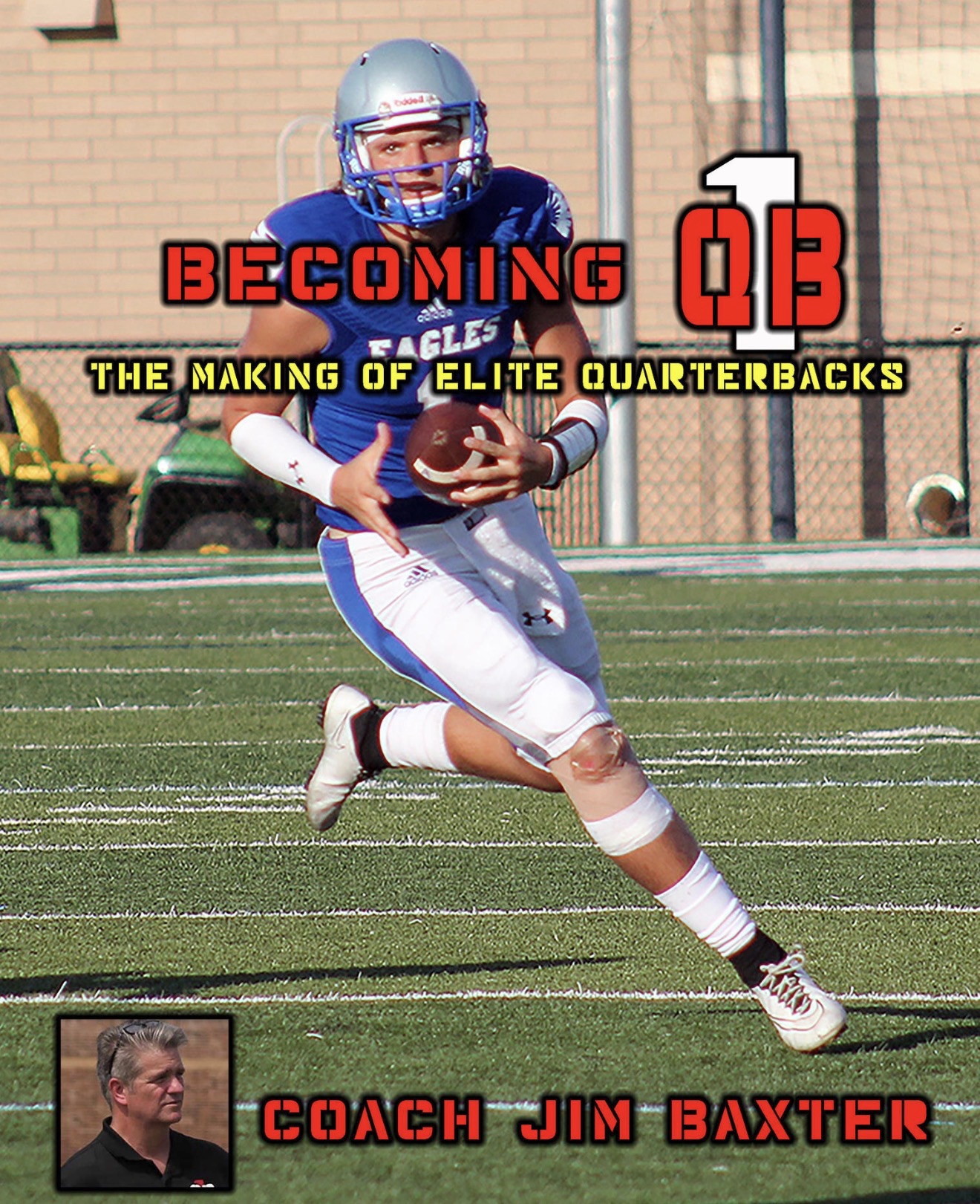
I’ve also written two books on the subject, The Book on Evaluating Football Players and Becoming QB1.
My master’s degree is in biomechanics, and that educational background played an important role in how I evaluated and developed quarterbacks. I incorporated slow-motion video analysis into my evaluations, studying throwing mechanics frame by frame rather than simply relying on what I could observe with the naked eye.
So when I see some of the quarterback evaluations being made today, particularly the five-star rankings handed out to players like Arch Manning and Bryce Underwood, I have to wonder just how much actual quarterback evaluation is taking place.
I’m not suggesting either of these young men lacks talent. They obviously possess physical abilities that made them highly regarded prospects.
But there’s a big difference between having the physical tools to play quarterback and actually being able to play the position at an elite level.
And I think that distinction has become increasingly lost in the recruiting industry.
THE MOST IMPORTANT SIX INCHES ARE BETWEEN THE EARS
One of the things I stressed throughout my years evaluating and training quarterbacks was the importance of processing information.
Not just processing information quickly, but processing it ACCURATELY.
There’s a difference.
A quarterback who makes a quick decision but makes the wrong decision hasn’t accomplished anything.
I used to incorporate a rather interesting drill into my QB1 training camps.
I’d have several targets positioned around the field, each identified by a number.
The quarterback would take his drop, and while he was going through his mechanics, I’d yell out a mathematical equation.
“Five plus four!”
Now the quarterback had to process that information, calculate the answer, locate the target marked with the number nine, get his body properly aligned, and deliver an accurate football.
And he had to do all of that without disrupting his throwing mechanics.
Why?
Because that’s what playing quarterback is all about.
It’s not simply throwing a football.
It’s processing information, making the correct decision, and executing that decision while everything around you is moving.
Now, obviously, solving a mathematical equation isn’t the same thing as reading a Cover 3 defense or recognizing a disguised blitz.
But the principle is similar.
You’re forcing the quarterback to process information while simultaneously performing a physical task.
And you’d be surprised how many physically gifted quarterbacks struggle when you introduce that additional mental responsibility.
That’s why I believe information processing is probably the single most important attribute when evaluating a quarterback prospect.
You can have all the physical tools in the world, but if you can’t process what you’re seeing and make the correct decision, those physical tools aren’t going to do you much good.
YOU CAN’T MEASURE FOOTBALL INTELLIGENCE WITH A TAPE MEASURE
One of my biggest criticisms of quarterback evaluations has always been the obsession with physical measurements.
He’s 6-foot-5.
He weighs 225 pounds.
He runs a 4.5 forty.
He can throw the football 70 yards.
Wonderful.
But can he recognize a rotating safety?
Can he identify where pressure is coming from?
Does he understand defensive leverage?
Can he anticipate when a receiver is going to become open rather than waiting until he’s already open?
And perhaps most importantly, can he do those things when the pocket is collapsing around him?
Those are the questions I want answered.
I’ve seen plenty of quarterbacks who looked like future first-round draft picks throwing against air at recruiting camps.
Beautiful mechanics. Tremendous arm strength. Impressive physical specimens.
Then you put a defense in front of them, and suddenly things change.
The game moves faster than their minds can process it.
That’s a problem.
And no amount of arm strength is going to compensate for consistently throwing the football to the wrong place.
I’ve always believed that a quarterback needs adequate arm strength, but adequate doesn’t necessarily mean he has to possess a cannon.
One of my favorite ways to evaluate functional arm strength was the deep comeback route.
Can the quarterback drive the football toward the sideline on a rope without putting excessive arc on the throw?
Can he make that throw with proper timing and velocity?
If he can, then he probably has enough arm strength to make the throws required at the next level.
After that, I want to know how well he sees the field, processes information, anticipates throws, and handles pressure.
Those things matter considerably more to me than whether he can throw a football 75 yards at a summer camp.
THE BIOMECHANICS MATTER, TOO
One thing that separated my approach to quarterback evaluation from many others was my educational background.
My master’s degree is in biomechanics, and I applied that knowledge extensively when evaluating and developing quarterbacks.
I spent countless hours studying slow-motion video of quarterbacks, breaking down their throwing mechanics frame by frame.
I wasn’t simply interested in whether a quarterback could throw a football 60 yards.
I wanted to understand HOW he generated that velocity.
Was he properly transferring force from the ground through his lower body?
Was his hip rotation synchronized with his upper body?
Was he maintaining proper hip-heel alignment?
Was there a mechanical deficiency somewhere in the kinetic chain that was limiting his throwing efficiency?
Those were the things I examined.
Slow-motion video evaluation allowed me to identify subtle mechanical deficiencies that weren’t always apparent when watching a quarterback throw at full speed.
And more importantly, it helped me distinguish between a quarterback who lacked natural throwing ability and one whose physical potential was being limited by correctable mechanical problems.
In my book Becoming QB1, I devoted considerable attention to the kinetic chain involved in throwing a football.
I broke the throwing motion into four phases: early cocking, late cocking or loading, acceleration, and follow-through.
I also emphasized footwork, hip-heel alignment, proper base, weight transfer, and the importance of what happens at the top of the quarterback’s drop.
Because here’s something I’ve always stressed.
Arm strength isn’t simply about the arm.
It’s about how efficiently the entire body works together to generate and transfer force.
That’s biomechanics.
And understanding those principles gave me another tool when evaluating a young quarterback’s potential.
It also helped me recognize something I believe gets overlooked far too often in recruiting evaluations.
There’s a difference between evaluating what a quarterback is today and projecting what he has the potential to become.
That’s what scouting is supposed to be about.
TRAINING QUARTERBACKS FOR CHAOS
Another important part of my quarterback development philosophy involved what I called chaos drills.
Football isn’t played in a controlled environment.
Defensive linemen get penetration. Linebackers blitz. Receivers get knocked off their routes. Quarterbacks get forced out of the pocket.
And sometimes everything that was supposed to happen on a particular play goes straight to hell.
That’s football.
I wanted quarterbacks who could function when things weren’t perfect.
I wanted to see how they responded when their first read disappeared, when they had to reset their feet, or when they were forced to make a throw from an unconventional position.
Could they maintain their composure?
Could they process the changing situation?
Could they make the correct decision without allowing their mechanics to completely fall apart?
Those are the situations that begin separating quarterbacks who can throw a football from quarterbacks who can actually play the position.
And those are the things that don’t always show up in a recruiting camp highlight video.
WHAT HAPPENED TO THE EVALUATION PROCESS?
When guys like Mike Farrell, Bobby Burton, Jeremy Crabtree, and I were involved in helping establish the credibility of the recruiting evaluation industry, we understood something fundamental.
Our responsibility was to evaluate prospects, not promote them.
And there is a difference.
I believe the recruiting industry has gradually moved away from some of the principles that made those evaluations credible in the first place.
Too much emphasis is placed on physical attributes, recruiting offers, camp performances, and the excitement surrounding highly publicized prospects.
And once a quarterback receives that coveted five-star designation, I sometimes wonder whether evaluators are willing to revisit their original assessment.
That’s where Arch Manning and Bryce Underwood enter the conversation.
Both were extraordinarily highly regarded high school prospects.
Both possessed impressive physical tools.
But their development at the college level raises legitimate questions about whether their original evaluations adequately accounted for the mental and technical demands of the position.
That doesn’t mean either quarterback cannot eventually become an outstanding player.
They’re young, and quarterback development is rarely linear.
I wrote years ago that projecting what a 17-year-old football player will become two to four years down the road is not an exact science.
I still believe that.
But acknowledging the uncertainty of projecting young players doesn’t mean we shouldn’t hold evaluators accountable for their methodology.
And that’s really my point.
I’m not criticizing these young men for being highly rated prospects.
I’m questioning the evaluation process that produced those ratings.
There’s a difference.
THE PROBLEM WITH THE FIVE-STAR LABEL
One of the biggest problems with the recruiting industry today is that the five-star label has become almost as important as the player himself.
Fans obsess over stars.
Recruiting services promote them.
College programs celebrate signing them.
And the media builds expectations around them before they’ve ever taken a meaningful snap of college football.
But a five-star ranking is supposed to be a projection.
It’s not a guarantee.
And when you’re projecting quarterbacks, you’re dealing with perhaps the most difficult position in all of sports to evaluate.
A quarterback can dominate high school football because he’s bigger, stronger, and more athletic than everyone around him.
He can put up ridiculous statistics in a quarterback-friendly offensive system.
He can look like a superstar throwing against air.
But none of those things necessarily tells me how he’s going to perform when he’s facing an SEC defense disguising its coverage and bringing pressure from multiple directions.
I’ve also seen quarterbacks overlooked because they played in Wing-T or option-oriented offenses that didn’t give them opportunities to accumulate impressive passing statistics.
That’s another mistake.
You have to evaluate the player, not simply the numbers.
And you have to understand the system he’s playing in before projecting how his abilities might translate to the next level.
That’s what good scouting requires.
LEADERSHIP AND MENTAL TOUGHNESS STILL MATTER
There’s another aspect of quarterback evaluation that I believe deserves more attention.
Leadership.
I’ve always believed that a football team often takes on the personality of its quarterback.
If he’s composed under pressure, his teammates are more likely to remain composed.
If he loses confidence when things go wrong, that uncertainty can spread throughout the offense.
The quarterback position requires a special kind of mental toughness.
You’re going to throw interceptions.
You’re going to miss open receivers.
You’re going to get hit.
You’re going to have games where absolutely nothing seems to work.
How do you respond?
Do you become frustrated and start forcing throws?
Do you lose confidence?
Or do you put the previous play behind you, step back into the huddle, and lead your team?
Those intangibles matter.
And they’re incredibly difficult to evaluate when you’re looking at a 17-year-old high school quarterback.
But difficult doesn’t mean they should be ignored.
In fact, I would argue that those are precisely the qualities evaluators should spend more time investigating.
STARS DON’T WIN FOOTBALL GAMES
I’ve always believed the quarterback position is as much about what happens between the ears as what happens between the shoulders.
Give me a quarterback with adequate arm strength, sound mechanics, excellent vision, accurate information processing, mental toughness, and the ability to lead.
I’ll take my chances with that young man.
You can improve footwork.
You can correct mechanical deficiencies.
You can develop throwing efficiency.
You can teach defensive concepts and help quarterbacks become better decision-makers.
But if you’re evaluating a quarterback primarily because he’s tall, athletic, has a powerful arm, and looks impressive throwing against air, you’re missing a significant part of the equation.
And frankly, that’s what concerns me about some of today’s recruiting evaluations.
I spent years studying this position, coaching it, developing training programs, analyzing slow-motion video, and writing about what separates good quarterbacks from great ones.
My background in biomechanics helped me understand the physical mechanics of the position.
My experience coaching and evaluating quarterbacks taught me that the mental side of the game is every bit as important, and in many cases even more important.
And after all those years, I keep coming back to the same conclusion.
The most important attribute of a quarterback isn’t how far he can throw the football.
It’s how accurately he can process what he’s seeing, make the right decision, and deliver the football where it needs to go.
Because at the end of the day, a five-star arm doesn’t necessarily make a five-star quarterback.
And it’s about time the recruiting industry started remembering that.
James Baxter
JB Talking Sports